
|
DANCE / INTERNATIONAL DANCE DAY
SLOVENIAN MESSAGE FOR INTERNATIONAL DANCE DAY 2026The Slovenian ITI Centre, the Contemporary Dance Association of Slovenia, the Slovenian Ballet Artists Association, and the Public Fund for Cultural Activities Republic of Slovenia have this year invited choreographer Mateja Bučar, recipient of the Prešeren Award for Life Achievements, to write the message for International Dance Day 2026.
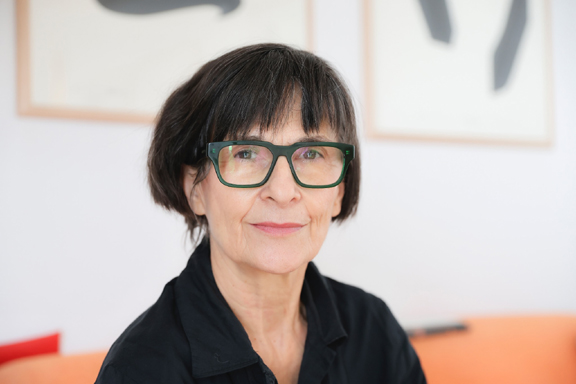
Mateja Bučar. photo: Jože Suhadolnik Dance–Governance–GraceDance is not a mere abstraction of life; it is life itself. It is the sophisticated mechanism of nature and civilization combined—a treasure chest of tools to enable, heal, and invent. On this World Dance Day, we recognize dance not just as a form of art and culture, but as a profound philosophy of the body and a vital strategy for survival. At its core, dance is a fundamental inquiry into balance. It asks how two bodies, two states of being, or a multiplicity of cultures—perhaps all nations and even religions—can move together without colliding or destroying one another. It lingers in the fragile space between stability and fall, between the extremes of weight and articulation, in the unpredictability of turns. To dance, namely, is to master the capacity to be oneself and "the other" simultaneously. We recall the wit of Molière, who suggested that the tragic blunders of history arise merely from a lack of skill in dancing. If our leaders were obliged to study the discipline of the waltz, the tango, or any other culture-preserving dance, perhaps they would learn to lead with grace and dignity rather than pure force. And, as Confucius implied, the sword should not be granted to those who do not know how to dance. Today, on World Dance Day, we make a bold demand: let leaders, strategists, economists, bankers, scientists, technologists, and many others study the knowledge of dance in all its forms and manifestations, and thus equipped, steer the world. We must once again learn the skills of “waltzes, tangos, or kolo”—their grace, dignity, attentiveness, and meaning—to restore the frayed bonds of humanity. Every culture, state, or community in the world carries its own rhythms, songs, and dances of survival: the elegance of tango; the spiritual depth of Saman, Kathak, or Zikr; the precision of the pas de deux; the freedom of contemporary dance; the ecstatic force of shamanic dance; the pulse of breakdance—and much more. The challenge of our time is not just how one culture moves, but how to continually “waltz” with many cultures, states, and religions—and find rhythms and steps that respect the particular while harmonizing the whole. The answer—still largely unnoticed—resides within dancing bodies and minds across the world. On World Dance Day, and beyond, we are called to reflect on the possibilities dance offers us—as art, as culture, and as a way of thinking and moving. Let us therefore treat every movement, direction, and decision in life as if it were on the verge of becoming a dance. – Mateja Bučar
dr. Mateja Bučar completed her studies in classical and contemporary ballet technique in 1979 at the Pôle National Supérieur de Danse Rosella Hightower in Cannes (France). In 1980, she joined the Slovenian National Theatre Opera and Ballet Ljubljana. In 1986, she also became a member of the Ljubljana Dance Theatre, founded two years earlier by Ksenija Hribar. In 1999, she founded DUM – Association of Artists, where she continues to collaborate artistically with Vadim Fiškin. Since 1992, her works have been presented both in Ljubljana and across Slovenia, as well as internationally, including in Vienna, Salzburg, Berlin, Moscow, Milan, Florence, Warsaw, Budapest, Zagreb, Rijeka, Stockholm, and Rotterdam. Her projects are conceived for diverse spatial contexts, ranging from theatre stages and gallery spaces to outdoor urban environments. In 2005, she received the Župančič Award of the City of Ljubljana. In 2014, she obtained the Ann Sayers Fund Award at Trinity Laban Conservatoire of Music and Dance in collaboration with City University of London, where she completed her PhD in 2015 with the dissertation Aesthetic Negativity and Choreographic Practice. In the same year, she received the Ksenija Hribar Lifetime Achievement Award from the Slovenian Contemporary Dance Association. In 2026, she was awarded the Prešeren Prize, Slovenia’s highest national award for the arts. The Slovenian Centre ITI is part of an international network in the field of performing arts, the International Theatre Institute ITI, World Organization for Performing Arts, founded in Prague in 1948 by UNESCO. In Slovenia, it operates under the auspices of the ODER Cultural Institute in Ljubljana and connects Slovenian artists with the global theatre and dance landscape. The Slovenian ITI Centre develops and supports artistic, educational, and research projects, promotes the mobility of artists, and enables international exchange of knowledge and practices in a contemporary context. Through its activities, it contributes to the visibility of Slovenian performing arts internationally and strengthens dialogue between different cultures and artistic approaches. The Contemporary Dance Association of Slovenia is the central professional association connecting creators, performers, and other professionals in the field of contemporary dance in Slovenia. It operates as a platform for advocacy, development, and promotion of dance, striving to improve working conditions, increase visibility, and strengthen systemic support for this artistic field. Through its programmes, awards, international collaborations, and networking activities, it reinforces the professional community and contributes to the development of a vital and socially relevant artistic expression. The Association of Ballet Artists of Slovenia promotes Slovenian ballet art both nationally and internationally, ensures its preservation and further development, and works towards improving its status as well as the status of ballet artists. It brings together ballet institutions, supports, includes, and advocates for ballet artists, and provides support to ballet organizations and individuals working in the fields of ballet and dance. Its core programmes focus on presentation, promotion, advancement, advocacy, research, and the preservation of Slovenian ballet art. Public Fund for Cultural Activities of the Republic of Slovenia was established with the aim of fostering development in the field of amateur cultural activities and encouraging creativity in the cultural sector. In the area of dance activities, the Fund operates as a key national platform for the development, support, and promotion of dance creativity within amateur culture. Through systematic education, the organization of showcase events and competitions, and professional support for mentors and creators throughout Slovenia, the Fund ensures accessibility of dance art in diverse environments, encourages high-quality growth of dance practices – from initial steps to advanced forms of creation — and makes a significant contribution to the recognition and development of dance culture in Slovenia.
About the International Dance DayIn 1982, at the initiative of Slovenian dancer, choreographer, opera and ballet historian, professor at the Academy of Music, medical doctor, and writer Dr Henrik Neubauer (1929–2024), the Dance Committee of the International Theatre Institute (ITI) proclaimed International Dance Day. It is celebrated annually on 29 April, the birthday of Jean-Georges Noverre (1727–1810), the founder of modern ballet. Dr Henrik Neubauer, also the author of the first international dance message, was an active member of ITI Worldwide for several decades—initially as President of the Slovenian Centre after Slovenia’s independence, and later as its long-standing collaborator. In 2017, the organization named him an honorary member. International Dance Day was conceived in the spirit of celebrating dance, emphasizing the universality of this art form, transcending political, cultural, and ethnic boundaries, and connecting people through a shared language—dance. Since then, in addition to international and national messages, a wide range of activities, parades, festivals, and public-space events have taken place worldwide each year on this day. The initiative to publicly mark International Dance Day in Slovenia has a history of more than fifteen years. In 2009, the Slovenian Ballet Artists Association, in collaboration with the newly established Slovenian ITI Centre, began publishing dance messages. In the same year, the initiative Go Out & Dance was launched by Goran Bogdanovski and Fičo Balet in collaboration with the regional network Nomad Dance Academy, taking place simultaneously in Ljubljana, Zagreb, Belgrade, Skopje, Sarajevo, and Sofia. In 2010, Fičo Balet continued the initiative in collaboration with Gledališče Ana Monro within the programme Prešerna Ana: Go Out and Dance in Ljubljana. The following year, the one-day festival expanded from Ljubljana to Maribor and Nova Gorica, with the newly established Nomad Dance Academy Slovenia as co-producer, alongside partners MN Dance Company and Živa dvorišča. In 2012, International Dance Day was marked in Ljubljana, Maribor, Nova Gorica, and Šempeter pri Gorici under the title Prešerna Ana, produced by Gledališče Ana Monro, joined by partner Terpsihora – Dance Centre Šempeter–Vrtojba. Following several years of interruption, in 2019 the Public Fund for Cultural Activities of the Republic of Slovenia reinstated the initiative to prepare the message for International Dance Day in the field of contemporary dance. Since 2020, the public marking of International Dance Day has been carried out in collaboration between the Slovenian Contemporary Dance Association and JSKD. In 2026, at the invitation of the Slovenian ITI Centre—which embodies the core idea of International Dance Day globally— the Slovenian Contemporary Dance Association, JSKD, and the Slovenian Ballet Artists Association jointly contributed to the national dance message.
|
|